
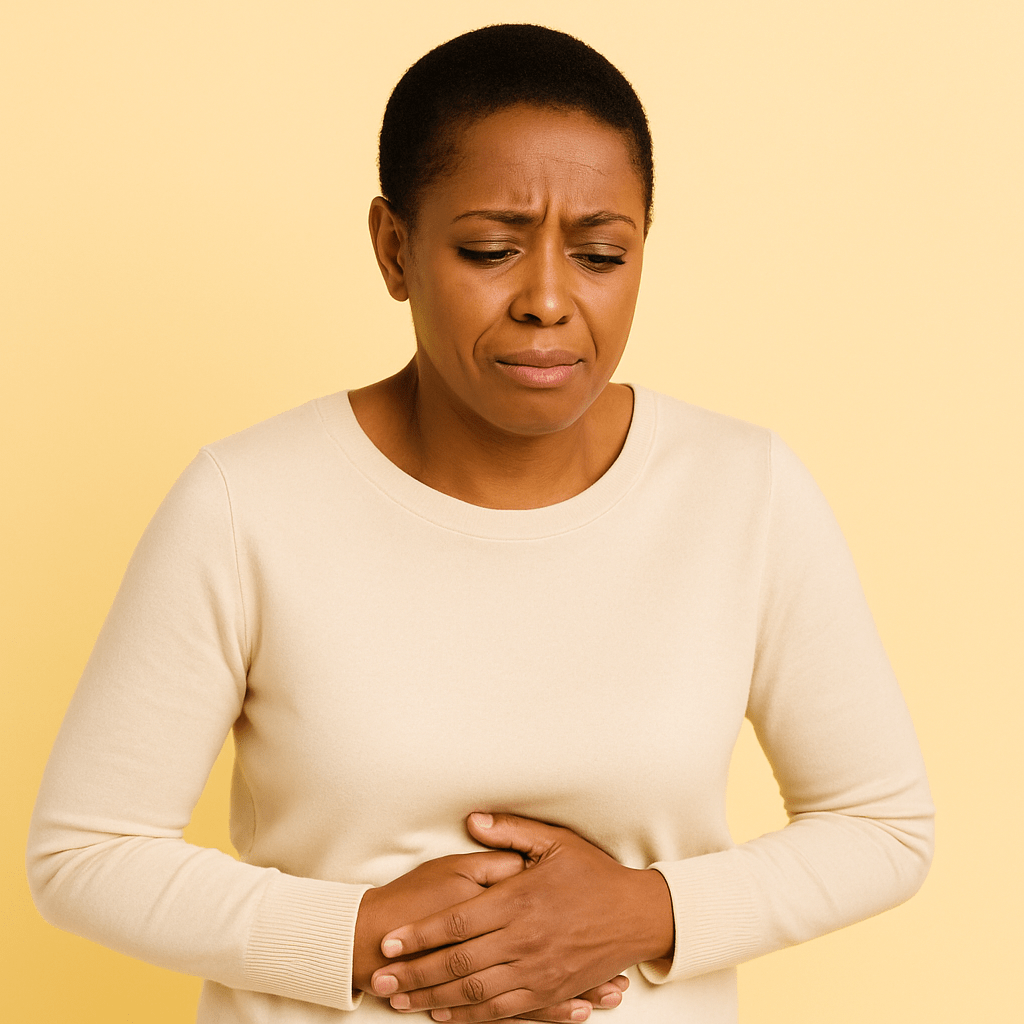
If you’re experiencing abdominal discomfort during menopause, you’re definitely not imagining things. While hot flashes and night sweats tend to steal the spotlight, digestive issues are actually one of the most common complaints during this transition—and yet they’re rarely talked about. A recent study presented at The Menopause Society’s 2025 Annual Meeting found that a staggering 94% of perimenopausal and menopausal women reported experiencing digestive symptoms, with 82% saying these symptoms either started or got worse during their menopause transition.
So if you’re dealing with bloating that makes your jeans unbearable by 3pm, cramping that feels eerily similar to period pain (but you haven’t had a period in months), or just a general sense of digestive chaos—you’re in good company. Let’s dig into what’s actually happening in your body and what you can do about it.
Why Menopause Causes Abdominal Discomfort
The short answer? Hormones. The longer answer is that estrogen and progesterone don’t just regulate your reproductive system—they’re actually pretty involved in how your digestive system functions too.
Research shows that estrogen directly affects how quickly food moves through your intestines (what doctors call “gut motility”) and how sensitive your gut is to pain. PubMed Central When estrogen levels drop during perimenopause and menopause, your digestive system doesn’t work quite the same way it used to.
Here’s what happens:
Slower Digestion: Estrogen helps stimulate the smooth muscles that line your intestines, creating those wave-like contractions that move food through your system. Less estrogen means things literally slow down, which can lead to constipation and that uncomfortable bloated feeling.
Increased Pain Sensitivity: Declining estrogen levels can make you more sensitive to gastrointestinal discomfort PubMed Central—so sensations that wouldn’t have bothered you before menopause might now feel genuinely painful or uncomfortable.
Changes in Your Gut Microbiome: Emerging research suggests that declining estrogen levels affect the diversity and balance of bacteria in your gut. A healthy microbiome is essential for proper digestion, and when that balance gets disrupted, you can experience bloating, gas, and irregular bowel movements.
The Cortisol Connection: As if the estrogen drop wasn’t enough, menopause also tends to increase cortisol (your stress hormone). Higher cortisol levels trigger an adrenaline response that can slow down digestive function and reduce the production of stomach acids EurekAlert!, leading to indigestion and general stomach upset.
Types of Abdominal Discomfort During Menopause
Not all abdominal discomfort is created equal. Here’s what you might be experiencing:
Bloating and Gas
This is the big one—literally. Bloating affects 77% of women going through menopause The Menopause Society, making it the most common digestive complaint. You might notice that you wake up relatively flat but by evening, you look and feel six months pregnant.
The bloating can be from actual gas buildup (thanks to slower digestion), water retention (also hormone-related), or a combination of both. And yes, it’s often worse after meals, especially larger ones or those high in fiber or dairy.
Important distinction: “Menopause belly” fat is different from bloating. Fat accumulation around your midsection during menopause is related to metabolic changes and tends to be consistent throughout the day. Bloating fluctuates and that uncomfortably full feeling comes and goes.
Cramping and Pain
Many women experience cramping that feels surprisingly similar to menstrual cramps—which is confusing when you’re months or years past your last period. This happens because the hormone fluctuations that cause cramping during your menstrual cycle can still trigger similar sensations during perimenopause.
You might also notice upper abdominal discomfort that feels like indigestion or a dull ache in your lower abdomen. Some women describe sharp, fleeting pains, while others experience more of a constant, uncomfortable pressure.
Constipation and Changes in Bowel Habits
About 54% of menopausal women report constipation The Menopause Society, and for good reason. The estrogen-related slowdown in gut motility means your bowels aren’t moving things along as efficiently as they used to. You might go days without a bowel movement, or when you do go, it’s difficult and uncomfortable.
Some women also notice their symptoms overlap with IBS (irritable bowel syndrome), experiencing alternating bouts of constipation and diarrhea, along with significant abdominal discomfort.
Other Factors That Make Digestive Issues Worse
While hormones are the primary culprit, they’re not working alone. Several other menopause-related changes can amp up your digestive troubles:
Sleep Disruption: Those night sweats that wake you up at 3am? They’re not just annoying—poor sleep directly affects your gut function and can worsen digestive symptoms.
Stress and Anxiety: Menopause can be a stressful time (understatement), and stress wreaks havoc on your digestive system through that gut-brain connection. Your gut literally responds to your emotional state.
Reduced Physical Activity: If menopause symptoms like fatigue or joint pain have you moving less, that lack of activity can slow down your digestive system even more.
New Food Sensitivities: Some women develop new sensitivities to foods they’ve eaten their whole lives—dairy, gluten, and high-FODMAP foods are common triggers.
How to Tell If Your Abdominal Discomfort Is Related to Menopause
The timing is usually the biggest clue. If you’re in your 40s or 50s and experiencing digestive changes alongside other menopause symptoms (hot flashes, irregular periods, sleep issues, mood changes), there’s a strong connection.
During perimenopause, you might notice your digestive symptoms follow a cyclical pattern—getting worse before your period (if you’re still having them) or at certain times of the month. Once you reach full menopause and hormones level out at their new baseline, symptoms often become more consistent rather than cyclical.
That said, it’s crucial to rule out other conditions. Digestive issues can also signal IBS, inflammatory bowel disease, celiac disease, gallbladder problems, or in rare cases, something more serious.
When to See a Doctor
Please don’t just assume every stomach issue is menopause. See your healthcare provider if you experience:
- Severe or sharp abdominal pain that doesn’t go away
- Pain accompanied by fever, vomiting, or vaginal bleeding
- Unexplained weight loss
- Blood in your stool or black, tarry stools
- Persistent changes in bowel habits lasting more than a few weeks
- Pain that regularly wakes you from sleep
- New digestive symptoms after age 60
These red flags could indicate something that needs immediate attention. Despite high symptom burden, many women don’t get proper diagnoses or adequate treatment The Menopause Society, so advocate for yourself and insist on thorough evaluation if something feels off.
Relief Strategies for Menopause-Related Abdominal Discomfort
The good news is that you have options—lots of them. Here’s what actually helps:
Dietary Changes
Go Mediterranean: An anti-inflammatory diet rich in fruits, vegetables, whole grains, fish, and olive oil can significantly reduce digestive discomfort. Think of it as feeding your gut microbiome the good stuff it needs to function properly.
Watch the Gas Triggers: While vegetables are generally great for you, cruciferous ones (broccoli, cauliflower, Brussels sprouts) can be rough on a sluggish digestive system. Same with beans, carbonated drinks, and sugar alcohols. You don’t have to avoid them completely, but notice what makes you feel worse.
Eat Smaller, More Frequent Meals: Your slower-moving digestive system handles smaller amounts of food better than three large meals. Try eating every 3-4 hours instead of having a huge dinner that sits in your stomach like a rock.
Add Probiotics: Fermented foods like yogurt, kefir, sauerkraut, and kimchi support your gut microbiome. If you’re not into fermented foods, a quality probiotic supplement can help.
Stay Hydrated: Aim for 8 glasses of water daily, especially if you’re dealing with constipation. But don’t chug water with meals—it can contribute to bloating and gas.
Lifestyle Modifications
Move Your Body: Regular exercise is one of the best things you can do for your digestive system. Even a 20-minute walk after meals helps stimulate gut motility and reduce bloating. You don’t need to become a marathoner—consistency matters more than intensity.
Manage Stress: This isn’t just wellness fluff—stress directly impacts your digestive function. Find what works for you, whether that’s yoga, meditation, therapy, or just taking actual lunch breaks instead of eating at your desk.
Improve Your Sleep: Work on managing those night sweats and insomnia. Better sleep = better digestion. It’s that simple.
Wear Comfortable Clothing: Seriously. That waistband digging into your bloated belly isn’t helping anything. Embrace elastic waists and looser fits, at least on bad symptom days.
Natural Remedies
Peppermint Tea: Can help relax the muscles in your digestive tract and relieve gas and cramping.
Ginger: Whether as tea, in food, or as a supplement, ginger has legitimate anti-nausea and digestive benefits backed by research.
Digestive Enzymes: These supplements can help break down food more effectively if your digestive system needs extra support.
Magnesium: Can help with constipation by drawing water into your intestines and promoting muscle relaxation. Start with a low dose to avoid overdoing it.
Medical Treatments
Hormone Replacement Therapy (HRT): For some women, HRT can significantly improve digestive symptoms by stabilizing those fluctuating hormone levels. According to The North American Menopause Society, hormone therapy remains the most effective treatment for menopause symptoms overall, though you’ll need to discuss the benefits and risks with your healthcare provider.
Over-the-Counter Options: Gas-X for gas and bloating, fiber supplements for constipation (introduce slowly!), or antacids for upper digestive discomfort can all provide relief.
Prescription Medications: If your symptoms are severe or overlapping with IBS, your doctor might prescribe antispasmodics, prescription-strength probiotics, or other targeted treatments.
The Bottom Line
Abdominal discomfort during menopause is real, it’s common, and it deserves attention. You’re not being dramatic, and you’re not just “getting older.” The hormone changes during menopause directly affect your digestive system The Menopause Society, and these symptoms can significantly impact your quality of life.
The good news is that most cases respond well to dietary changes, lifestyle modifications, and sometimes medical treatment. You don’t have to just suffer through this. Start with the simpler interventions—adjust your diet, move more, manage stress—and see what makes a difference. If symptoms persist or worsen, work with a healthcare provider who takes your concerns seriously.
Your digestive system is trying to adapt to a new hormonal reality, and that takes time. Be patient with yourself, experiment with different strategies, and remember that what works for someone else might not work for you. This is all part of the process, and there are real solutions available.
Frequently Asked Questions
Can menopause cause abdominal bloating every day?
Yes, daily bloating is common during menopause. The decline in estrogen affects how your digestive system processes food and regulates water retention, which can lead to persistent bloating. While it might fluctuate in severity throughout the day (often worse in the evening), many women experience it consistently until their hormone levels stabilize post-menopause.
Does menopause cause sharp abdominal pain?
Menopause can cause cramping and discomfort, but sharp, severe pain should always be evaluated by a doctor. While hormone fluctuations can cause cramping similar to menstrual cramps, sharp persistent pain could indicate other conditions like ovarian cysts, gallbladder issues, or digestive disorders that need medical attention.
Will HRT help with digestive issues during menopause?
For some women, yes. Hormone replacement therapy stabilizes estrogen levels, which can improve gut motility and reduce symptoms like bloating and constipation. However, HRT isn’t right for everyone, and you’ll need to discuss the potential benefits and risks with your healthcare provider based on your individual health history.
Why is my stomach so sensitive during menopause?
Declining estrogen levels can increase visceral sensitivity, meaning your gut becomes more reactive to stimuli that wouldn’t have bothered you before. PubMed Central The gut-brain axis is also affected by hormonal changes, making your digestive system more responsive to stress and emotional changes during this time.
What can I take for menopause bloating?
Options include over-the-counter remedies like Gas-X (simethicone), digestive enzymes, probiotics, or magnesium for constipation-related bloating. Natural remedies like peppermint tea and ginger can also help. Dietary changes—reducing sodium, avoiding gas-producing foods, and eating smaller meals—often provide significant relief. If symptoms are severe, talk to your doctor about prescription options or whether HRT might be appropriate.
How long does menopause abdominal discomfort last?
It varies significantly. Some women experience digestive issues primarily during perimenopause (which can last 4-10 years) and find symptoms improve once they reach postmenopause and hormones stabilize. Others may have persistent issues that require ongoing management. The good news is that symptoms often become more predictable and manageable once you figure out what strategies work for your body.
Medical Disclaimer: This article is for informational purposes only and is not a substitute for professional medical advice, diagnosis, or treatment. Always consult your healthcare provider about any questions you have regarding your symptoms or medical conditions.
Sources:
- The Menopause Society – Digestive Health Issues Study
- National Institutes of Health – Ovarian Hormones and Gastrointestinal Symptoms
- Healthline – Menopause and Digestive Health
- North American Menopause Society Position Statements on Hormone Therapy
This article is for informational and educational purposes only and does not constitute medical advice. The content provided is not intended to be a substitute for professional medical advice, diagnosis, or treatment. Always seek the advice of your physician or other qualified health provider with any questions you may have regarding a medical condition or treatment.
