
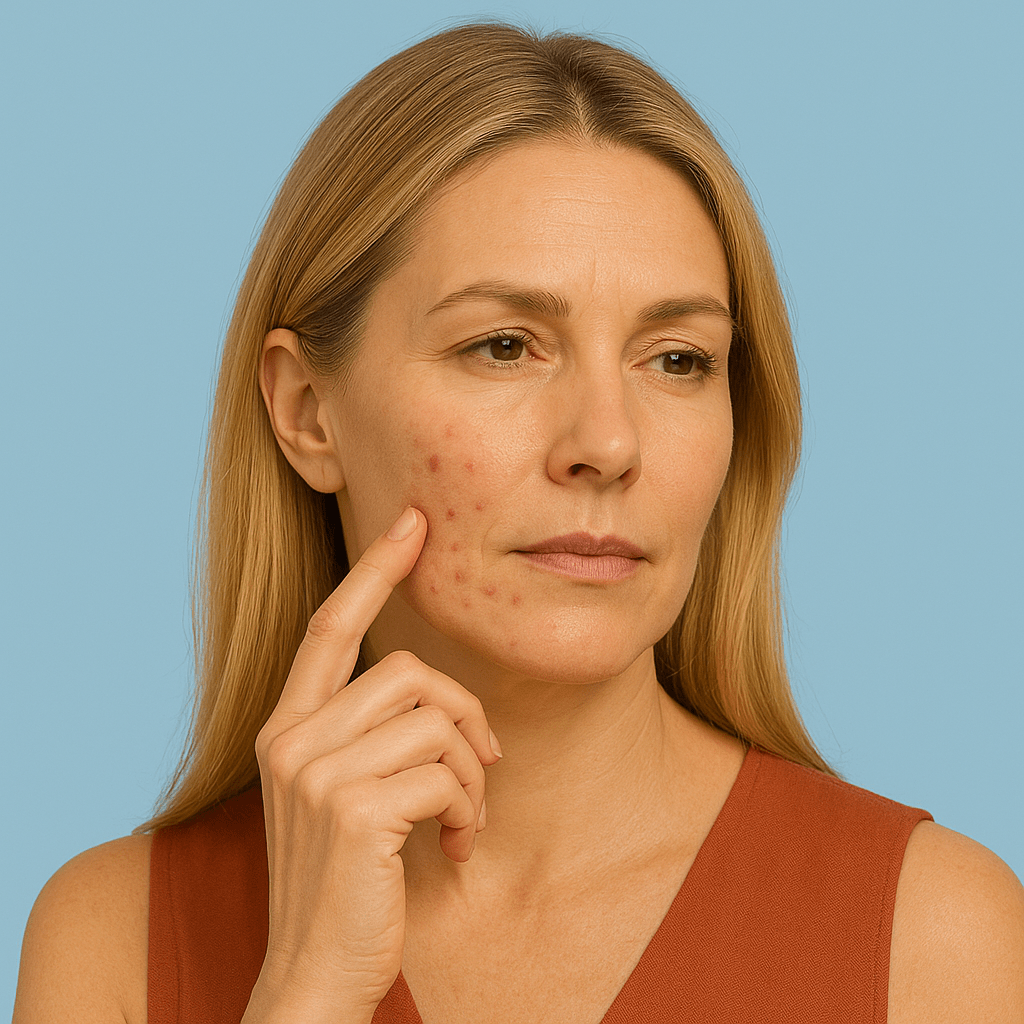
You thought breakouts were behind you. Then perimenopause arrived, and suddenly you’re dealing with pimples that rival your teenage years. If you’re experiencing acne and perimenopause at the same time, you’re definitely not imagining things — and you’re far from alone.
The frustrating reality? About 26% of women in their 40s deal with acne, according to research published in the Journal of the American Academy of Dermatology. And while it might feel like your skin is betraying you at the worst possible time, there’s solid science behind what’s happening — and plenty of effective treatments.
Let’s break down why perimenopause triggers breakouts and, more importantly, what actually works to clear them up.
Why Does Perimenopause Cause Acne?
The short answer: hormones. But not quite the way you might expect.
During perimenopause (which can start in your late 30s to mid-40s and last anywhere from 4 to 10 years), your estrogen levels begin declining. But here’s the catch — your androgens, including testosterone, don’t drop as quickly. This creates what doctors call a “relative androgen excess”.
Even though your testosterone levels aren’t necessarily high, they’re higher relative to your falling estrogen. And testosterone has a direct line to your skin’s oil glands. It stimulates your sebaceous glands to produce more sebum (oil), which can clog pores, trap bacteria, and trigger those familiar inflammatory breakouts.
Key insight: Your skin is covered in estrogen receptors. When estrogen declines, it affects everything from oil production to collagen levels to how quickly your skin heals. This is why perimenopause brings such a wide range of skin changes — not just acne, but also dryness, thinning, and increased sensitivity.
The mechanism is actually similar to teenage acne, which is also driven by hormone fluctuations. But there’s one critical difference: your skin at 45 is not the same as your skin at 15. It’s thinner, drier, less resilient, and heals more slowly. This matters a lot when it comes to treatment.
What Does Perimenopause Acne Look Like?
Perimenopause acne tends to show up in specific patterns that are different from teenage breakouts:
- Location: Primarily the lower face — chin, jawline, and neck. Teen acne typically centers on the T-zone (forehead, nose), but hormonal adult acne gravitates toward the lower third of the face.
- Type: Often deep, cystic bumps that form under the skin and never come to a “head.” These can be tender and painful to touch.
- Other presentations: You may also see whiteheads, blackheads, and red inflammatory papules. Some women experience breakouts on the chest, back, or shoulders too.
- Scarring risk: Because mature skin heals more slowly, perimenopause acne can leave behind hyperpigmentation (dark spots) or scarring more easily.
Worth noting: perimenopause acne can look different for everyone. Some women experience occasional breakouts around their cycle, while others deal with persistent, stubborn acne that doesn’t seem to follow any pattern.
Other Factors That Make It Worse
Hormones are the main driver, but several other factors common during perimenopause can pile on:
- Stress: And perimenopause brings plenty of it. Stress triggers cortisol production, which increases androgens, which ramps up oil production. According to research, 70-80% of people experience more acne during stressful periods.
- Sleep deprivation: Night sweats keeping you up? Poor sleep raises cortisol levels, creating a vicious cycle that affects your skin.
- Diet: Some evidence suggests dairy products and high-glycemic foods may worsen acne for some women, though responses vary.
- Wrong skincare products: This is a big one. Using harsh products designed for teenage skin can backfire badly (more on this below).
- Genetics: If your mother or grandmother dealt with midlife acne, you may be more likely to experience it too.
Think of perimenopause as a “perfect storm” — fluctuating hormones, heightened stress, disrupted sleep, and major life demands all converging at once. No wonder your skin is reacting.
Why Your Teenager’s Products Won’t Work
Here’s something most articles don’t tell you: grabbing the Clearasil from your daughter’s bathroom is likely to make things worse.
Teen acne products are formulated for young, oily, resilient skin. They typically contain high concentrations of benzoyl peroxide or other drying agents that can strip your skin. At 15, skin bounces back. At 45? Those same products can cause irritation, peeling, redness, and even more breakouts.
As dermatologist Dr. Sarvenaz Zand explains in an interview with Stripes, teen products will “fry and peel the skin so quickly that the acne will make your breakouts look and feel even worse” on mature skin.
The irony of perimenopause skin? Many women experience both dryness and acne simultaneously. Your skin may be producing more oil in some areas while feeling parched and sensitive in others. This requires a more nuanced approach than simply blasting everything with acne fighters.
How to Treat Perimenopause Acne
Start With the Right Skincare Routine
Before reaching for treatments, get your basics right:
- Gentle cleanser: Skip the harsh sulfate-based washes. Look for a mild, hydrating cleanser that won’t strip your skin.
- Moisturizer: Yes, even if you’re breaking out. A lightweight, non-comedogenic moisturizer helps maintain your skin barrier. Skipping moisturizer can actually trigger more oil production.
- Sunscreen daily: SPF 30 or higher. Mature skin needs protection, and many acne treatments increase sun sensitivity.
- Determine your current skin type: It may have changed since your 20s. Wash your face with a gentle cleanser, wait 30 minutes, and observe. Shiny all over? Oily. Shiny T-zone only? Combination. Tight or flaky? Dry.
Over-the-Counter Treatments
- Salicylic acid (2%): Unclogs pores and is generally gentler than benzoyl peroxide. A good starting point.
- Azelaic acid: Anti-inflammatory, helps with hyperpigmentation, and well-tolerated by sensitive skin.
- Adapalene (Differin): An over-the-counter retinoid that promotes cell turnover. Start slowly — every other night — and build tolerance.
- Benzoyl peroxide (low concentration): If you use it, stick to 2.5%. Higher concentrations are more drying without being more effective.
Pro tip: Introduce one new product at a time and give it 6-8 weeks before judging results. Layering multiple actives too quickly is a recipe for irritation.
Prescription Options
If OTC treatments aren’t cutting it after a few months, a dermatologist can prescribe stronger options:
- Topical retinoids (tretinoin): The gold standard for acne and aging skin. Requires building tolerance, but highly effective.
- Spironolactone: This is increasingly the first-choice oral medication for hormonal acne in women. It blocks androgens at the skin level and has been shown to improve acne in 65-93% of women in various studies. Bonus: it can also help with excess facial hair, another common perimenopause complaint.
- Birth control pills: For women still menstruating, certain oral contraceptives can stabilize hormones and reduce breakouts.
- Oral antibiotics: Sometimes used short-term for inflammatory acne, though dermatologists limit duration due to antibiotic resistance concerns.
- Isotretinoin (Accutane): Reserved for severe, treatment-resistant cases.
What About HRT?
Hormone replacement therapy isn’t prescribed solely for acne, but if you’re considering HRT for other perimenopause symptoms (hot flashes, sleep issues, mood changes), it may help your skin as a secondary benefit. By stabilizing estrogen levels, HRT can reduce the relative androgen excess driving your breakouts.
According to the American Academy of Dermatology, some women see improvement in acne with hormonal therapy — though results vary. Talk to your healthcare provider about whether this might be appropriate for your situation.
Lifestyle Changes That Help
- Manage stress: Easier said than done, but cortisol directly worsens acne. Even 10 minutes of deep breathing, yoga, or walking can help.
- Prioritize sleep: Work on sleep hygiene even if night sweats are disrupting your rest.
- Consider your diet: Pay attention to whether dairy or high-sugar foods seem to trigger breakouts for you personally.
- Don’t pick: Your skin heals more slowly now. Picking increases scarring and hyperpigmentation risk.
- Change pillowcases frequently: Oils and bacteria build up faster than you’d think.
- Be patient: Most acne treatments take 6-12 weeks to show real results. Stick with your routine.
When to See a Dermatologist
Make an appointment if you experience:
- Acne that doesn’t improve with OTC treatments after 2-3 months
- Painful, deep cystic acne
- Scarring or significant hyperpigmentation
- Acne that’s affecting your quality of life or mental health
- Signs of other hormonal issues (sudden severe acne, excess facial hair growth, significant hair loss, or irregular periods beyond typical perimenopause patterns)
Don’t feel like you have to “tough it out.” Dermatologists treat adult acne every day, and there’s no reason to suffer through something that’s very treatable. According to the International Journal of Women’s Dermatology, menopausal acne affects 12-22% of women and has a significant impact on quality of life — seeking help is completely valid.
FAQ: Acne and Perimenopause
Does perimenopause cause acne?
Yes, perimenopause commonly causes acne due to hormonal fluctuations. As estrogen levels decline faster than androgens like testosterone, the relative excess of androgens stimulates oil production in your skin. This can clog pores and trigger breakouts, particularly along the jawline, chin, and neck. About 26% of women in their 40s experience acne.
Why am I suddenly getting acne at 45?
Acne appearing in your mid-40s is often caused by the hormonal shifts of perimenopause. Even if you had clear skin your whole life, the changing balance between estrogen and androgens can trigger breakouts for the first time. This is called “late-onset acne” and accounts for 20-40% of adult acne cases. The good news: it’s very treatable.
What does perimenopause acne look like?
Perimenopause acne typically appears on the lower face — chin, jawline, and neck — rather than the T-zone common in teen acne. It often presents as deep, cystic bumps that don’t come to a head and can be tender or painful. You may also see whiteheads, blackheads, and red inflammatory bumps. Some women experience breakouts on the chest and back as well.
Does acne go away after menopause?
For many women, acne improves after menopause as hormone levels stabilize at lower levels. However, some women continue to experience breakouts into their 50s and beyond — about 15% of women over 50 still deal with acne. If it persists, treatments like spironolactone and topical retinoids can effectively manage it long-term.
Can I use my teenager’s acne products?
It’s not recommended. Products designed for teenage skin contain high concentrations of drying agents like benzoyl peroxide that can irritate mature skin, which is thinner, drier, and more sensitive. Using harsh teen products can cause peeling, redness, and actually worsen breakouts. Look for gentler formulations with lower concentrations designed for adult skin.
Is spironolactone effective for perimenopause acne?
Yes, spironolactone is considered the first-choice oral medication for hormonal acne in women. It works by blocking androgens at the skin level, reducing oil production. Studies show it improves acne in 65-93% of women. It can also help with other androgen-related symptoms like excess facial hair and female pattern hair loss. Your dermatologist can determine if it’s right for you.
Can HRT help with perimenopause acne?
HRT may help reduce acne by stabilizing hormone levels, though it’s not typically prescribed solely for skin issues. If you’re considering HRT for other perimenopause symptoms like hot flashes or sleep problems, discuss potential skin benefits with your healthcare provider. Some women see improvement in their acne as a secondary benefit of hormone therapy.
How long does perimenopause acne last?
Perimenopause itself can last 4-10 years, and acne may persist throughout this transition. Some women see improvement once they reach menopause and hormone levels stabilize, while others continue to experience breakouts. With proper treatment, most women can successfully manage perimenopause acne regardless of how long the transition takes.
The Bottom Line
Dealing with acne during perimenopause is genuinely frustrating — there’s no sugarcoating that. But understanding why it’s happening can help you stop feeling blindsided and start taking action that actually works.
The key points to remember: your hormones are shifting, your skin needs gentler care than it did decades ago, and effective treatments exist. Whether you manage it with the right OTC products or need prescription help from a dermatologist, perimenopause acne is very treatable.
You don’t have to just wait it out. And you definitely don’t have to steal your teenager’s Clearasil.
This article is for informational and educational purposes only and does not constitute medical advice. The content provided is not intended to be a substitute for professional medical advice, diagnosis, or treatment. Always seek the advice of your physician or other qualified health provider with any questions you may have regarding a medical condition or treatment.
