
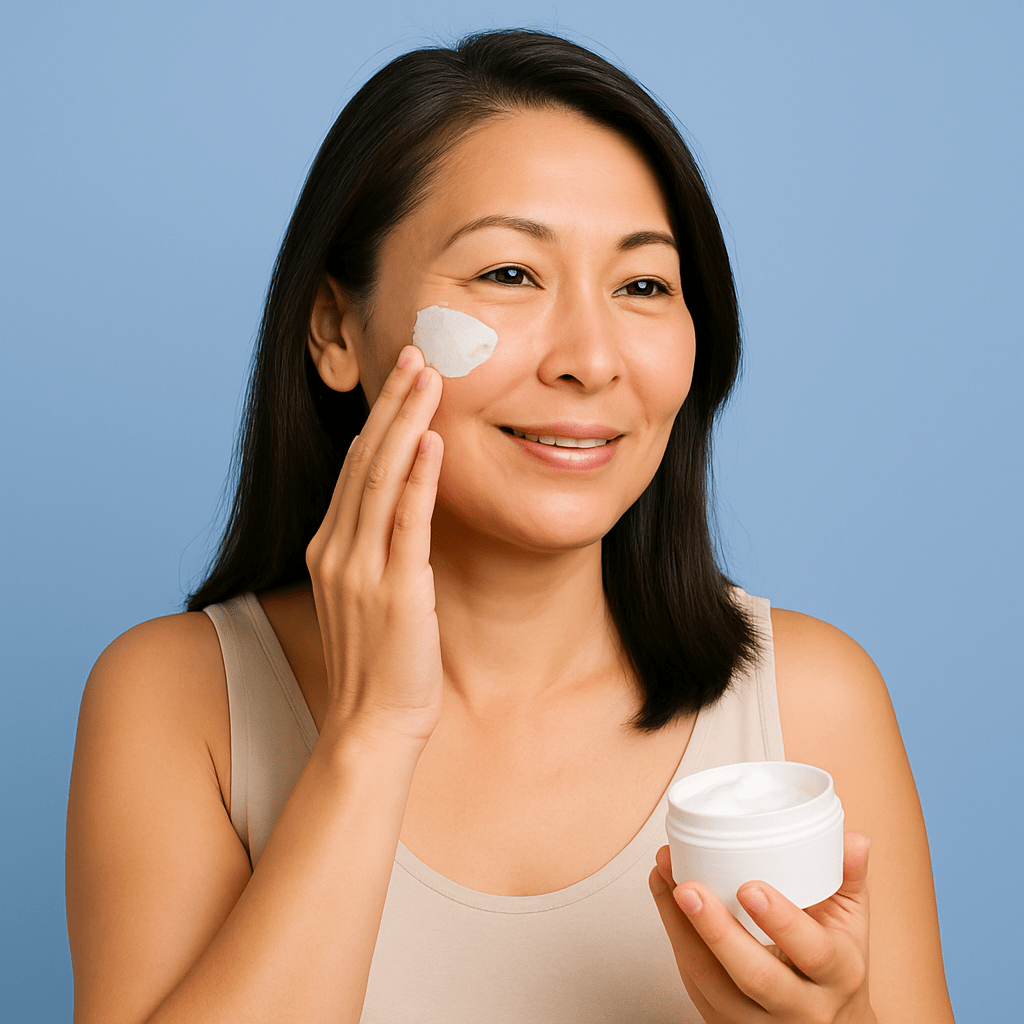
If you’re researching estriol face cream, you’re probably wondering whether this hormone-based skincare treatment actually works—and what specific benefits you can expect for your aging skin.
Estriol is the mildest of the three main estrogens, and when applied topically to facial skin, research shows it can address multiple signs of aging at a cellular level. Unlike many anti-aging ingredients that work on the skin’s surface, estriol activates estrogen receptors within skin cells, triggering processes that rebuild your skin’s structural foundation.
Here’s what clinical studies have demonstrated estriol can do for facial skin:
- Increase collagen production and skin thickness
- Improve moisture retention and hydration
- Reduce the appearance of fine lines and wrinkles
- Enhance skin elasticity and firmness
- Brighten skin tone and reduce age spots
- Strengthen the skin barrier
- Reduce inflammation and redness
- Improve wound healing
- Address crepey skin texture
This article breaks down each of these benefits, explains how estriol works at the molecular level, shares specific research findings, and sets realistic expectations about timelines and results. We’ll also compare estriol to other popular anti-aging ingredients so you can understand where it fits in your skincare routine.
How Estriol Works on Skin: The Science Behind the Benefits
To understand estriol’s benefits, you need to know what happens to your skin as estrogen levels decline.
Your skin contains estrogen receptors—specifically estrogen receptor beta (ERβ)—throughout all its layers. These receptors are like locks waiting for estrogen keys. When estrogen levels drop during perimenopause and menopause, these receptors go largely unactivated, which triggers a cascade of aging changes:
- Collagen production drops by about 30% in the first five years of menopause
- Skin thickness decreases by roughly 1.13% per year after menopause
- Elastin fibers become disorganized and less functional
- Hyaluronic acid and other moisture-retaining molecules decline
- Cell turnover slows down
- The skin barrier weakens
When you apply estriol topically, it binds to those estrogen receptors in your skin cells and essentially “wakes them up.” This activation sends signals to dermal fibroblasts (the cells that produce collagen and elastin) telling them to get back to work. It also affects keratinocytes in the upper layers of skin, improving barrier function and moisture retention.
What makes estriol particularly interesting for facial use is that it’s selective. It preferentially binds to ERβ receptors, which are abundant in skin, while having less activity on ERα receptors that are more prevalent in breast and uterine tissue. This selectivity is why many practitioners consider estriol safer for facial application than stronger estrogens like estradiol.
The Proven Benefits of Estriol Face Cream
Increases Collagen Production
This is arguably estriol’s most significant anti-aging benefit. Collagen is the structural protein that gives skin its firmness and plumpness, and its loss is the primary driver of skin aging.
How it works: When estriol activates estrogen receptors in dermal fibroblasts, it upregulates genes responsible for collagen synthesis. Specifically, it increases production of Type I and Type III collagen, the most abundant collagens in skin.
The research: A landmark study published in the International Journal of Dermatology found that topical estrogen application increased collagen content by 6.49% after just 6 months of use. Another study measuring skin thickness (which directly correlates with collagen content) found increases of 7.7-9.5% after 6 months of topical estriol.
More impressive: research on systemic estrogen therapy (which gives us insight into estrogen’s effects on skin) shows that it can prevent or reverse the 30% collagen loss that occurs in the first five post-menopausal years.
What this means for you: More collagen translates to firmer, more resilient skin with improved structural support. This addresses sagging, loss of definition, and that deflated appearance that comes with age.
Improves Skin Thickness and Firmness
Skin naturally gets thinner with age, especially after menopause. This thinning contributes to a crepey texture, increased fragility, and more visible underlying structures (like veins and tendons).
How it works: Estriol increases dermal thickness through multiple mechanisms: boosting collagen and elastin production, increasing glycosaminoglycans (molecules that provide volume), and promoting fibroblast proliferation. Essentially, it rebuilds the dermis layer.
The research: Clinical studies have consistently shown increases in skin thickness with topical estrogen use. One study measuring skin thickness at various body sites found increases ranging from 7.7% to 9.5% after 6 months. Another study specifically on facial skin showed significant improvement in skin density scores.
A fascinating detail: the effect is dose-dependent, meaning higher concentrations of estriol tend to produce more dramatic thickness improvements, though this needs to be balanced against potential irritation.
What this means for you: Thicker skin looks more youthful, feels more substantial to the touch, and is more resistant to damage. You may notice your skin feels less papery and fragile.
Enhances Moisture and Hydration
Dry, dehydrated skin is one of the earliest and most noticeable changes during perimenopause. Estriol directly addresses this at multiple levels.
How it works: Estriol increases hyaluronic acid production in the skin. Hyaluronic acid can hold up to 1,000 times its weight in water, making it crucial for skin hydration. Estriol also improves ceramide production and skin barrier function, reducing transepidermal water loss (TEWL)—basically, it helps your skin hold onto the moisture it has.
Additionally, estrogen increases sebum production slightly, which many menopausal women welcome since declining estrogen often makes skin drier.
The research: Studies have demonstrated that topical estrogen significantly reduces transepidermal water loss. One study found a 35% decrease in TEWL after 12 weeks of estriol use. Another showed significant improvements in skin hydration scores within just 4 weeks.
Research on systemic estrogen therapy shows increases in skin moisture content of up to 25% and increases in skin hyaluronic acid by approximately 50%.
What this means for you: Improved hydration means plumper-looking skin, reduced appearance of fine lines (which are often just dehydration), better makeup application, and relief from that tight, uncomfortable feeling dry skin creates. This is often one of the first benefits users notice.
Reduces Fine Lines and Wrinkles
This is usually the benefit people are most interested in—and estriol does deliver here, though with realistic limitations.
How it works: Wrinkle reduction happens through the combined effects of increased collagen production, improved hydration, enhanced elasticity, and skin thickening. Estriol doesn’t just “fill in” wrinkles superficially; it addresses the structural changes that create them.
The research: A comprehensive study published in Maturitas examined the effects of topical estrogen on wrinkles and found significant improvements. Specifically, depth of wrinkles decreased, and skin roughness improved measurably.
Another study using skin replica analysis (which creates precise molds of skin texture) showed that topical estriol reduced wrinkle depth by an average of 14-18% after 6 months of consistent use.
It’s worth noting that estriol appears most effective on fine lines and moderate wrinkles caused by loss of collagen and moisture. Deep expression lines and severe photoaging may see less dramatic improvement.
What this means for you: You can expect softening of fine lines, particularly around the eyes and mouth. Wrinkles will appear less pronounced, and your overall skin texture will smooth out. Don’t expect Botox-level results, but improvements are noticeable in before-and-after photos.
Improves Skin Elasticity
Skin elasticity—the ability to snap back when stretched—declines significantly with age and estrogen loss. This loss of elasticity contributes to sagging, particularly in the cheeks, jawline, and neck.
How it works: Estriol stimulates production of elastin, the protein fiber that gives skin its spring and resilience. It also organizes the elastic fiber network more efficiently and may reduce the activity of elastase, an enzyme that breaks down elastin.
The research: Studies measuring skin elasticity (using devices called cutometers that gently suction the skin and measure recovery) have shown improvements of 9-18% after 6 months of topical estrogen use.
One particularly interesting study found that the combination of topical estriol with systemic hormone therapy produced the most significant improvements in elasticity, suggesting a synergistic effect.
What this means for you: Improved elasticity translates to skin that looks and acts younger—more bounce, less sag, better resilience. Your skin will literally feel more springy to the touch.
Brightens Skin Tone and Reduces Age Spots
Uneven pigmentation and age spots are common frustrations as skin ages. Estriol can help with this, though it’s not as powerful as dedicated brightening agents like hydroquinone or tretinoin.
How it works: Estriol affects melanin production and distribution through several mechanisms. It can inhibit tyrosinase, the enzyme responsible for melanin synthesis. It also improves cell turnover, helping to shed pigmented cells more efficiently. Additionally, by improving overall skin health and barrier function, estriol helps create a more even complexion.
The research: Studies on topical estrogen have shown improvements in skin pigmentation and overall skin tone evenness. One study found that participants using topical estriol reported significant improvements in skin brightness and reduction in age spots after 12 weeks.
Research on systemic estrogen therapy has also demonstrated improvements in melasma and postmenopausal hyperpigmentation, suggesting that estrogen’s effects on melanocytes are significant.
What this means for you: While estriol probably won’t dramatically fade dark spots on its own, it can contribute to a brighter, more even complexion over time. Combining it with vitamin C or niacinamide may enhance these effects.
Strengthens the Skin Barrier
Your skin barrier is your first line of defense against environmental damage, irritants, and moisture loss. As estrogen declines, barrier function weakens, leading to increased sensitivity and dryness.
How it works: Estriol enhances production of ceramides, cholesterol, and fatty acids—the lipid components that form the “mortar” between skin cells in the stratum corneum (outermost layer). It also improves tight junction proteins between cells and enhances antimicrobial peptide production.
The research: Studies have demonstrated that topical estrogen improves barrier repair rate. One study showed that estrogen-treated skin recovered from barrier disruption 40% faster than untreated skin.
Another study found significant improvements in ceramide levels and stratum corneum hydration with estriol use, correlating with reduced sensitivity and improved barrier metrics.
What this means for you: A stronger barrier means less sensitivity, better tolerance of other active ingredients, reduced redness and irritation, and better protection against environmental stressors. Many women notice their skin becomes less reactive overall.
Reduces Inflammation and Redness
Chronic low-grade inflammation is increasingly recognized as a driver of skin aging. Estriol has notable anti-inflammatory effects.
How it works: Estriol modulates immune responses in skin, reducing production of pro-inflammatory cytokines while supporting anti-inflammatory pathways. It also stabilizes mast cells (which release histamine and trigger inflammation) and improves vascular function, reducing redness.
The research: Studies have shown that topical estrogen reduces inflammatory markers in skin. Research on conditions like rosacea and inflammatory skin diseases has found that declining estrogen correlates with increased inflammation, while estrogen replacement helps calm inflammatory responses.
One study on menopausal women found that topical estrogen significantly reduced skin redness and inflammatory lesions compared to placebo.
What this means for you: Less inflammation means calmer, less reactive skin. You may notice reduced redness, less flushing, and fewer inflammatory breakouts. Skin appears more even-toned and less irritated.
Improves Wound Healing
While not strictly a cosmetic benefit, estriol’s wound-healing properties have important implications for skin health and recovery.
How it works: Estriol accelerates all phases of wound healing—inflammation, proliferation, and remodeling. It enhances keratinocyte migration, stimulates fibroblast activity, and improves angiogenesis (new blood vessel formation). It also reduces excessive scarring.
The research: Numerous studies have demonstrated that estrogen deficiency impairs wound healing, while estrogen replacement accelerates it. One study found that topical estrogen reduced healing time by approximately 30% in postmenopausal women.
Research has also shown that topical estrogen improves healing outcomes after cosmetic procedures, reducing downtime and minimizing scarring risk.
What this means for you: Your skin will recover faster from minor injuries, cosmetic procedures, and irritation. This also suggests better ongoing repair of daily micro-damage from environmental stressors.
May Help with Crepey Skin
Crepey skin—that thin, crinkled texture often seen on the neck, décolletage, and under-eyes—is a particularly frustrating sign of aging that’s notoriously hard to treat.
How it works: Crepey skin results from a combination of thinning skin, loss of collagen and elastin, fat loss in the deeper layers, and chronic dehydration. Estriol addresses several of these causes simultaneously by increasing dermal thickness, boosting collagen, improving hydration, and enhancing elasticity.
The research: While there aren’t studies specifically focused on “crepey skin” as an outcome measure, the improvements in skin thickness, elasticity, and hydration documented in estriol studies directly address the underlying causes of crepiness.
Clinical observations suggest that consistent use of estriol over 6+ months can produce meaningful improvement in crepey texture, particularly when combined with other treatments like retinoids or neck-firming procedures.
What this means for you: Improvement in crepey skin takes time and patience—this is one of the slowest benefits to manifest. But with consistent use over many months, you may notice that thin, crinkled areas become smoother and more resilient. Don’t expect miracles, but modest improvement is possible.
Timeline: When to Expect Results from Estriol Face Cream
One of the most common questions is “how long does estriol take to work?” The answer depends on which benefits you’re tracking. Here’s a realistic timeline:
2-4 Weeks: Moisture and Hydration Improvements This is usually the first change you’ll notice. Your skin feels more comfortable, plump, and hydrated. Makeup may apply more smoothly. Fine lines caused primarily by dehydration may soften noticeably.
4-8 Weeks: Texture and Tone Improvements Your skin’s surface texture becomes smoother and more refined. Pores may appear smaller. You might notice a subtle brightening or more even tone. The skin barrier has strengthened, so sensitivity may decrease.
8-12 Weeks: Fine Line and Wrinkle Reduction Superficial lines begin to soften measurably. Crow’s feet, forehead lines, and lines around the mouth become less pronounced. Skin feels firmer to the touch. This is when changes become visible in photographs.
3-6 Months: Firmness, Thickness, and Elasticity This is when the deeper structural changes become apparent. Skin feels substantially thicker and more resilient. Elasticity improves noticeably. Sagging softens slightly. Overall facial contours may appear slightly lifted or less deflated.
6+ Months: Ongoing Improvement and Maintenance Benefits continue to build with consistent use. Collagen continues accumulating. Many studies show that improvements plateau around 12-18 months, at which point you’re maintaining rather than building. Stopping estriol will gradually reverse the benefits over several months.
Important note: Results vary significantly based on starting skin condition, age, estriol concentration, consistency of use, and what else you’re doing for your skin. Younger perimenopausal women may see faster, more dramatic results than women who’ve been postmenopausal for decades.
Estriol vs Other Anti-Aging Ingredients: How It Compares
Understanding how estriol stacks up against other popular anti-aging ingredients helps you make informed decisions about your skincare routine.
Estriol vs Retinol
Retinol (vitamin A) is the gold-standard anti-aging ingredient with the most research backing.
How they’re similar:
- Both increase collagen production
- Both improve cell turnover
- Both reduce fine lines and wrinkles
- Both improve skin texture and tone
How they’re different:
- Mechanism: Retinol works through retinoic acid receptors; estriol through estrogen receptors
- Strengths: Retinol is more effective for photoaging, sun damage, and pigmentation. Estriol is more effective for moisture retention and skin thickness
- Side effects: Retinol causes more irritation, dryness, and peeling. Estriol is typically gentler
- Speed: Retinol shows results slightly faster (visible in 6-8 weeks). Estriol takes 8-12 weeks for visible results
Can you use them together? Yes, absolutely. Many practitioners recommend combining them for complementary benefits. Use retinol at night and estriol in the morning, or use both at night if your skin tolerates it. The combination may be more effective than either alone.
Estriol vs Vitamin C
Vitamin C is primarily an antioxidant and brightening agent.
How they’re similar:
- Both stimulate collagen production
- Both can brighten skin tone
- Both provide antioxidant benefits
How they’re different:
- Strengths: Vitamin C is superior for brightening, antioxidant protection, and treating hyperpigmentation. Estriol is superior for hydration, thickness, and addressing estrogen-related aging
- Stability: Vitamin C is notoriously unstable and oxidizes easily. Estriol is much more stable
- Skin type: Vitamin C can irritate sensitive skin. Estriol is typically calming
Can you use them together? Yes, they complement each other well. Vitamin C in the morning provides antioxidant protection, and estriol can be used morning or night for structural benefits.
Estriol vs Peptides
Peptides are short chains of amino acids that signal cells to perform specific functions.
How they’re similar:
- Both signal cells to increase collagen production
- Both improve firmness and elasticity
- Both are relatively gentle on skin
How they’re different:
- Mechanism: Peptides work through various signaling pathways depending on the peptide type. Estriol specifically activates estrogen receptors
- Specificity: Peptides target specific processes (like collagen synthesis or barrier repair). Estriol has broader effects throughout skin
- Evidence: Estriol has more robust clinical evidence in peer-reviewed studies. Peptide research is more variable
Can you use them together? Yes, they can be complementary. There’s no reason they would interfere with each other.
Estriol vs Hyaluronic Acid
Hyaluronic acid (HA) is a humectant that attracts and holds water in skin.
How they’re similar:
- Both improve hydration
- Both plump skin
- Both reduce the appearance of fine lines
How they’re different:
- Mechanism: HA works by attracting water to skin’s surface. Estriol increases the skin’s own HA production and also works on deeper structural levels
- Depth: HA primarily affects superficial hydration. Estriol affects all skin layers
- Duration: HA provides temporary hydration. Estriol creates lasting structural changes
Can you use them together? Absolutely—they’re highly complementary. Use HA as a hydrator and estriol for deeper structural benefits. Many users find this combination particularly effective.
The Bottom Line on Combining Ingredients
Estriol works through a unique mechanism (estrogen receptor activation) that doesn’t conflict with other anti-aging ingredients. In fact, combining estriol with retinol, vitamin C, peptides, and/or hyaluronic acid can provide comprehensive anti-aging benefits that address aging through multiple pathways.
A sample routine might include:
- Morning: Vitamin C serum, estriol cream, hyaluronic acid, sunscreen
- Evening: Gentle cleanser, retinol or peptide serum, estriol cream
Always introduce new actives gradually and monitor your skin’s response.
Who Benefits Most from Estriol Face Cream
Estriol doesn’t work equally for everyone. Here’s who sees the best results:
Perimenopausal and Postmenopausal Women (Best Candidates)
Women experiencing or who have experienced menopause benefit most dramatically from estriol because estrogen depletion is the primary driver of their skin aging.
Why it works so well: You’re directly replacing what your skin has lost. Your skin’s estrogen receptors are essentially starved and respond enthusiastically when estriol is applied.
Expected results: Often dramatic improvements in hydration, thickness, and overall skin quality within 3-6 months. Some women report their skin looks and feels like it did years earlier.
Early Perimenopausal Women (Excellent Candidates)
Women in their 40s experiencing early estrogen fluctuations can benefit significantly, potentially preventing some age-related changes before they become pronounced.
Why it works: You’re supplementing declining estrogen before major structural changes occur, which may slow or prevent dramatic aging.
Expected results: Maintenance of skin quality, prevention of rapid thinning and drying, continued radiance and resilience.
Younger Women with Premature Skin Aging (Variable Results)
Women under 40 with good estrogen levels but premature aging (often from sun damage, smoking, or genetics) may see modest benefits, but estriol isn’t addressing their primary aging driver.
Why results vary: If estrogen isn’t your limiting factor, adding more won’t be as transformative. Retinol, vitamin C, and sun protection are probably more impactful.
Expected results: Mild improvements in hydration and texture, but less dramatic than older women experience.
Women with Estrogen-Dominant Conditions (Not Ideal Candidates)
Women with conditions like endometriosis, fibroids, or estrogen-receptor-positive breast cancer history should avoid or use extreme caution with any estrogen, even topical. Always consult your oncologist or specialist.
The Bottom Line
Estriol face cream is most effective for women whose skin aging is driven primarily by estrogen deficiency—meaning perimenopausal and postmenopausal women. If you’re dealing with hormonal skin changes (sudden dryness, thinning, loss of firmness coinciding with cycle changes or menopause), estriol targets your specific aging mechanism.
Realistic Expectations: What Estriol Will and Won’t Do
It’s important to be honest about estriol’s capabilities and limitations.
What Estriol WILL Do:
- Meaningfully improve skin hydration and moisture retention
- Increase dermal thickness and density over time
- Stimulate collagen and elastin production
- Soften fine lines and moderate wrinkles
- Improve overall skin texture and smoothness
- Enhance skin firmness and elasticity
- Strengthen your skin barrier, reducing sensitivity
- Create a more even, brighter skin tone
- Help skin recover faster from damage
- Provide anti-inflammatory benefits
What Estriol WON’T Do:
- Eliminate deep wrinkles or expression lines (think Botox-level results)
- Dramatically lift sagging skin or jowls (you’d need procedures for that)
- Fade significant sun damage or dark spots quickly (tretinoin and hydroquinone are more effective)
- Replace need for sunscreen (UV protection remains essential)
- Work instantly (you need 8-12 weeks minimum for visible changes)
- Work equally well for everyone (results vary)
- Reverse decades of aging overnight
- Replace healthy lifestyle factors (sleep, nutrition, stress management)
Setting Realistic Expectations
Think of estriol as a foundational treatment that improves your skin’s underlying health and structure. It won’t give you a facelift, but it can make your skin look and function more like it did 5-10 years ago.
The most satisfied users are those who:
- Commit to consistent use for at least 6 months
- Combine estriol with other evidence-based treatments
- Have realistic goals focused on overall skin quality rather than eliminating specific wrinkles
- Understand it’s maintenance and prevention as much as reversal
Safety and Side Effects of Estriol Face Cream
Estriol is generally well-tolerated when applied topically to facial skin, especially compared to stronger estrogens like estradiol.
Common Side Effects (Usually Mild):
Initial adjustment period (first 2-4 weeks):
- Slight skin sensitivity or tingling
- Mild redness or flushing
- Minor breakouts as skin adjusts
- Increased oiliness (usually welcome if you’re dry)
Ongoing potential effects:
- Slight darkening of pigmented areas initially (usually temporary)
- Increased sensitivity to sun (wear SPF religiously)
- Skin may become more reactive if you stop suddenly
Rare Side Effects:
- Persistent irritation or allergic reaction to estriol or formula ingredients
- Hormonal acne or cystic breakouts
- Excessive oiliness
- Skin becomes too sensitive to tolerate
Systemic Absorption and Safety:
The key question: does topically applied estriol get absorbed systemically and affect your body beyond your skin?
Research shows: Some absorption occurs, but it’s minimal with facial application. Blood levels of estrogen may increase slightly but typically remain within normal postmenopausal ranges. This is particularly true with concentrations below 1%.
Considerations:
- Estriol is the weakest estrogen, so even if absorbed, its systemic effects are minimal
- Use on face is less absorptive than use on larger body areas or mucous membranes
- Women with estrogen-sensitive conditions should still consult doctors
Who Should Avoid or Use Caution:
Avoid estriol if you have:
- History of estrogen-receptor-positive breast cancer
- Active hormone-dependent cancers
- History of blood clots or stroke
- Unexplained vaginal bleeding
- Known allergy to estriol
Use caution and consult doctor if you have:
- Family history of breast cancer
- Uterine fibroids or endometriosis
- Liver disease
- Migraine with aura
- Taking other hormone medications
Safe for most:
- Otherwise healthy perimenopausal/postmenopausal women
- Women already on systemic HRT (though check with your doctor)
- Women with normal health screenings
The Bottom Line on Safety
Topical estriol for facial use is considered very safe for most women, especially at concentrations of 0.3-1%. The risk profile is substantially lower than systemic HRT. However, anyone with hormone-sensitive conditions or concerns should consult with their healthcare provider before using.
Frequently Asked Questions About Estriol Face Cream Benefits
Does estriol really work for wrinkles?
Yes, clinical studies show estriol reduces wrinkle depth and softens fine lines through increased collagen production and improved hydration. However, results are modest compared to procedures like Botox or fillers. Expect 10-20% improvement in wrinkle appearance over 6 months rather than complete elimination.
How long does it take to see results from estriol cream?
Initial hydration improvements appear in 2-4 weeks. Texture and tone improvements emerge at 4-8 weeks. Visible wrinkle reduction takes 8-12 weeks. Significant firmness and thickness changes require 3-6 months. Maximum benefits appear around 12-18 months of consistent use.
Is estriol better than retinol for aging skin?
Neither is definitively “better”—they work differently. Retinol is more effective for sun damage, pigmentation, and cell turnover. Estriol is more effective for hormone-related skin changes like thinning, dryness, and loss of thickness. The most effective approach for menopausal women is using both.
Can younger women use estriol face cream?
Yes, but the benefits are less dramatic if you’re not experiencing estrogen decline. Women under 40 with normal hormone levels typically see modest improvements. Estriol becomes increasingly beneficial as you approach and enter perimenopause (typically early-to-mid 40s).
What concentration of estriol is most effective?
Clinical studies have used concentrations ranging from 0.3% to 2%. Most practitioners recommend starting with 0.3-0.5% and increasing to 0.5-1% for optimal results. Higher isn’t always better—concentrations above 1% increase irritation risk without proportionally greater benefits.
Will estriol make me break out?
Some women experience temporary breakouts in the first 2-4 weeks as skin adjusts. This usually resolves. Estriol can slightly increase sebum production, which dry menopausal skin typically welcomes, but oily or acne-prone skin types may not tolerate it as well.
Can estriol help with crepey neck skin?
Yes, but improvement takes time and consistency—expect 6-12 months of daily use. Estriol addresses the underlying causes of crepiness (thinning, collagen loss, dehydration), but results are gradual. Combining with retinol and neck-specific treatments may enhance results.
Is estriol safe if I’m on hormone replacement therapy?
Generally yes, but check with your prescribing doctor. Topical facial estriol adds minimal systemic hormone exposure compared to HRT. Most doctors consider it safe to use alongside systemic HRT, but coordination of care is wise.
Can I use estriol cream with other active ingredients?
Yes, estriol combines well with retinol, vitamin C, peptides, hyaluronic acid, and niacinamide. These ingredients work through different mechanisms and can provide complementary benefits. Introduce new actives gradually to monitor tolerance.
What happens if I stop using estriol?
Benefits gradually reverse over several months as your skin’s estrogen receptors become less activated. Collagen production returns to baseline, hydration decreases, and thickness improvements fade. To maintain benefits, estriol needs to be an ongoing commitment.
The Bottom Line on Estriol Face Cream Benefits
Estriol face cream offers legitimate, scientifically-backed benefits for aging skin, particularly for women experiencing perimenopause and menopause. It’s not a miracle cure, but it addresses the fundamental hormonal drivers of skin aging in ways that other ingredients cannot.
The most compelling benefits—increased collagen production, improved skin thickness, enhanced moisture retention, and strengthened skin barrier—all work together to make skin look and function more youthfully. Clinical studies consistently demonstrate these effects, with measurable improvements appearing within weeks to months.
What makes estriol unique is that it’s targeting the cause of hormonally-driven skin aging rather than just treating symptoms. When estrogen levels drop, your skin deteriorates in specific, predictable ways. Estriol essentially tells your skin cells to behave as if you still have adequate estrogen, triggering repair and maintenance processes that have slowed down.
That said, realistic expectations are crucial. Estriol won’t eliminate deep wrinkles, dramatically lift sagging skin, or work overnight. It’s a foundational treatment that works best as part of a comprehensive skincare routine including retinoids, antioxidants, hydrators, and—most importantly—sunscreen.
For perimenopausal and postmenopausal women noticing sudden changes in skin quality—thinning, dryness, loss of radiance, declining firmness—estriol directly addresses your specific aging mechanism. Combined with patience, consistency, and realistic goals, it can make a meaningful difference in how your skin looks and feels.
If you’re dealing with hormonally-driven skin aging and want to address it at its source, estriol face cream deserves serious consideration.
Learn More
- Best Estrogen Face Creams for Menopause: Expert Reviews & Buying Guide
- Estriol Cream for Face: The Complete Guide to Younger-Looking Skin
- Estradiol vs Estriol Face Cream: Which Estrogen is Better for Menopausal Skin?
- How to Use Estriol Cream on Your Face: Complete Application Guide
This article is for informational and educational purposes only and does not constitute medical advice. The content provided is not intended to be a substitute for professional medical advice, diagnosis, or treatment. Always seek the advice of your physician or other qualified health provider with any questions you may have regarding a medical condition or treatment.
